Europe Has Changed the Rules — Here's What Every Traveller and Business Must Know Now
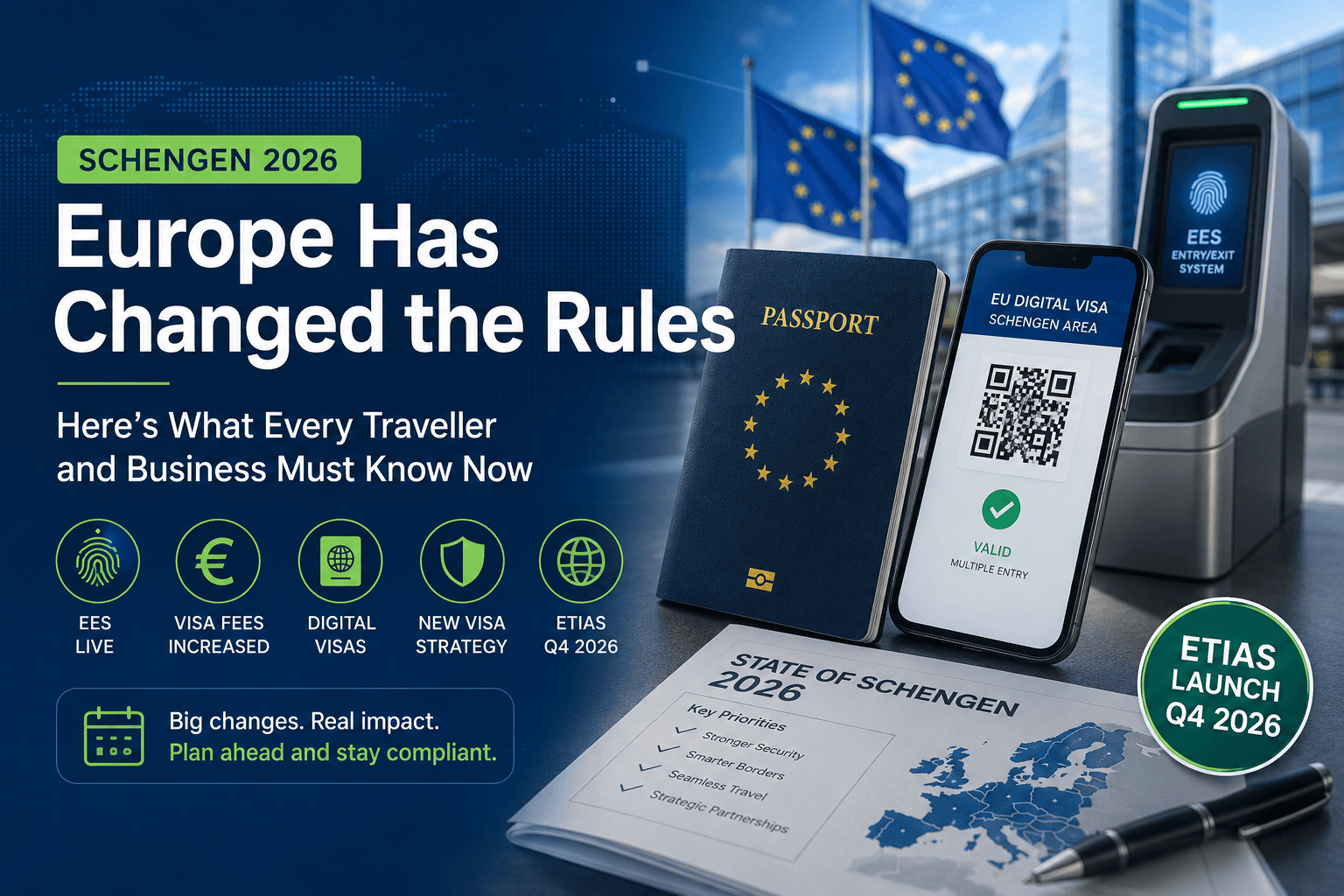
Urgent: Schengen just changed forever
The Schengen Area is undergoing its most significant overhaul in over a decade. From biometric border technology now live at every crossing point, to a landmark shift in visa fee policy, the window for "business as usual" travel planning has closed. Whether you manage corporate mobility programmes, advise frequent travellers, or are planning your next European trip, these five developments demand immediate attention — and proactive preparation.
Entries registered under EES
New visa fee (was €80)
ETIAS launch confirmed
Travellers affected by ETIAS
1. Border Technology
The Entry/Exit System is now fully live across all 29 Schengen states
The EU's digital Entry/Exit System (EES) went fully operational across every Schengen border crossing point in April 2026 — replacing manual passport stamps with biometric registration.
- • Biometric capture: Fingerprint scans + facial scan stored in central EU database
- • Day‑precision tracking: Overstays are now virtually impossible to hide
- • First weeks: 66M entries, 32,000+ refused – 7,000 for overstaying
⚠️ Impact: Frequent travellers and mobility teams must prepare for biometric enrolment on first post‑April 2026 entry.
2. Visa Fees
Standard visa fee rises for the first time since 2020
The Schengen short-stay visa fee has increased from €80 to €90 for adults — a 12.5% rise, and the first adjustment in six years.
- • New adult fee: €90 (uniform across all 29 member states)
- • Children 6–12: €45 (half price); under 6 remain free
- • Service fees: VFS Global / TLS Contact unchanged
💼 Business impact: Update travel budgets and cost modelling immediately.
3. Digital Transformation
Physical visa stickers are being phased out in favour of a secure digital barcode
The EU has confirmed the transition from physical passport vignettes to cryptographically secure digital visas — a 2D barcode format that eliminates sticker fraud and simplifies border verification.
- • Pilot in 2026: Limited rollout, full transition by 2027–28
- • Unified EU platform: Online applications, digital docs, single portal for 11M+ annual applications
- • Note: In‑person biometric appointment still required for first‑time applicants
4. Policy Strategy
The EU adopted its first-ever comprehensive Visa Strategy — reshaping the decade ahead
In early 2026, the European Commission published its inaugural EU Visa Policy Strategy — a multi‑year roadmap that repositions visa policy as a tool for security, economic competitiveness, and geopolitical diplomacy.
- • Revised Visa Code: Targeting security + talent attraction (proposed 2026)
- • 30‑day processing target for highly skilled workers
- • "Trusted companies" framework to fast‑track frequent business travellers
- • Geopolitical flexibility: Suspension of visa‑free access can happen faster
5. Upcoming Requirement
ETIAS pre-travel authorisation is confirmed for the final quarter of 2026
The European Travel Information and Authorisation System (ETIAS) is now confirmed to launch in Q4 2026, affecting visa‑exempt nationals from over 60 countries — representing more than 1.4 billion travellers worldwide.
- • Cost: €20 per application
- • Validity: 3 years, multiple trips
- • Processing: Most approvals in minutes
- • Who is exempt? Full Schengen visa holders – ETIAS only for visa‑free nationals
🛫 Action: Airlines, booking platforms, and corporate travel managers must integrate ETIAS checks before Q4 2026.
State of Schengen 2026 — Key Headline
The European Commission's annual State of Schengen report, published in May 2026, confirmed a 26% decrease in illegal border crossings and highlighted EES, ETIAS preparations, and the new Visa Strategy as central priorities for the 2026–2027 Schengen cycle.